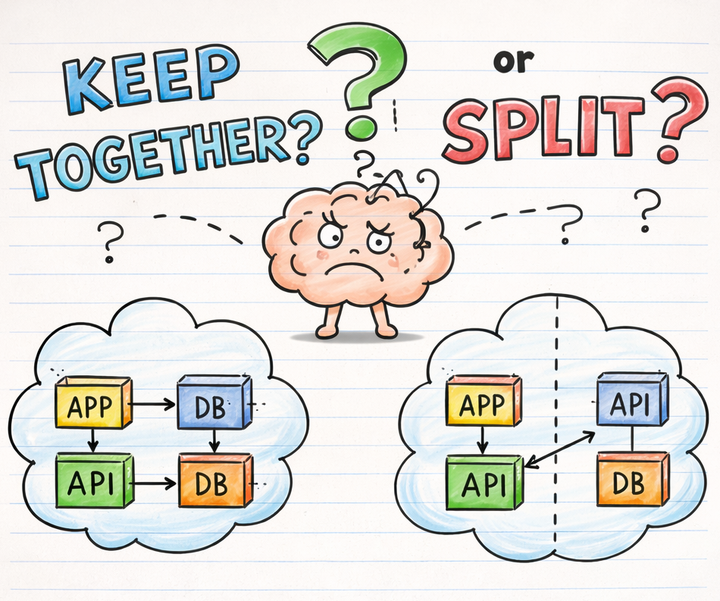
Ubiquitous Language: Words that reveal domains (Part 2) Language is a powerful tool for discovering domain boundaries. By analyzing terms, meanings, and context, teams can better structure their systems around real business knowledge.
Ubiquitous Language: Stopping the translation game (Part 1) Ubiquitous Language is a core Domain-Driven Design pattern that aligns developers and domain experts through a shared vocabulary used consistently in conversations, documentation, APIs, and code.
The strategic and tactical sides of Domain-Driven Design Domain-Driven Design improves collaboration, system evolution, and onboarding by embedding domain knowledge directly into code and establishing clear architectural boundaries.
Mind the gap between problem and solution spaces Every system starts with a Problem Space - the needs, issues, and expectations of stakeholders. The Solution Space defines how we address those problems through design and architecture.
The good, the bad and the boundaries Good architecture is not about choosing one type of boundary. It’s about combining domain, technical, and infrastructure perspectives to design systems that evolve with growing knowledge.
Event Storming Big Picture: Turning insights into action (Part 6) Big Picture Event Storming doesn’t end with the timeline. Learn how its outcomes - hot spots, pivotal events, swimlanes, actors, and systems - help assess project risk, define system boundaries, and decide which processes to explore next.
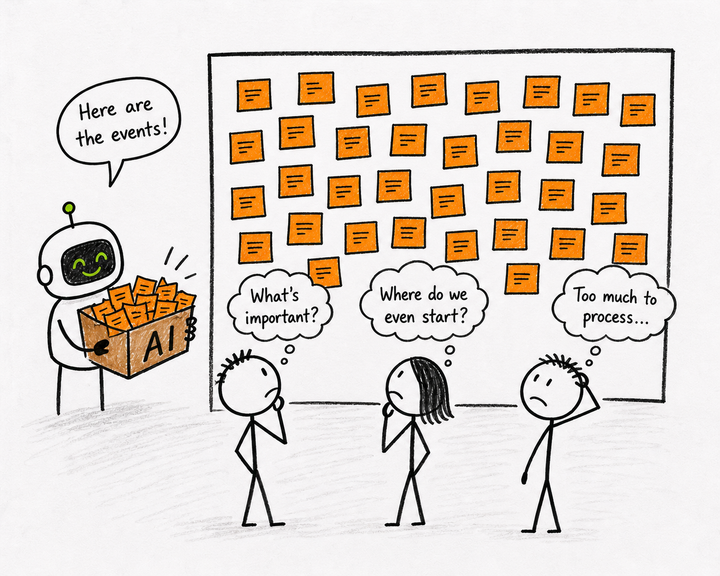
Event Storming Big Picture: Keeping the workshop on track (Part 5) A successful Event Storming workshop is not about perfection. Learn how facilitators can focus on the most important events, manage discussions, capture hotspots, and ensure the workshop delivers real value.