
Event Storming Foundations: Facilitating beyond the basics (Part 4)
Event Storming works best when facilitated with intention. Clear goals, prepared questions, and disciplined discussions help teams focus on understanding the domain instead of getting lost in details.
This article is part of the Event Storming Foundations series:
1. Understanding events as immutable business facts (Part 1)
2. Preparing for a successful workshop (Part 2)
3. Choosing your workshop type (Part 3)
4. Facilitating beyond the basics (Part 4)
Event storming is a powerful technique for collaborative domain exploration, but like any tool, it’s not a one-size-fits-all solution. In this article, we’ll delve into practical tips and tricks to make your event storming sessions more effective and productive.
Tips and Tricks
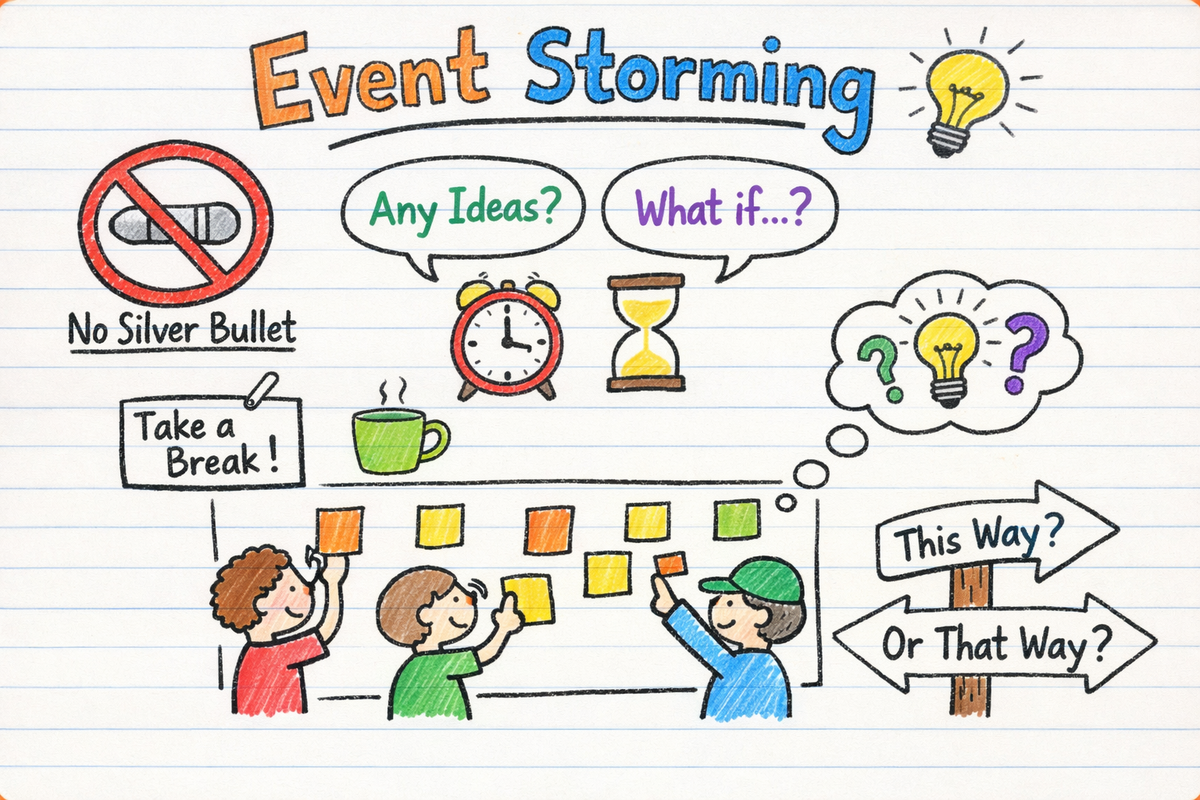
No Silver Bullet
Remember that there’s no silver bullet in software development. If event storming doesn’t seem to work for your specific problem, don’t be discouraged. Instead, consider trying alternative approaches. Event storming might not always be the right fit, and that’s okay.
Adapt Recommendations
When following my (and anyones) recommendations, keep in mind that they are just that—recommendations. They work in many cases but adapt them to your unique situation if needed. For example, if I suggest running a session for 1.5 hours, but you need an extra 10 minutes, feel free to adjust accordingly.
The Purpose of the Workshop
The primary goal of an event storming workshop is not to provide a crystal-clear picture that requires no further discussion or validation. Nor is it about answering every question comprehensively. Instead, focus on reducing misunderstandings and establishing a common understanding and foundation for future conversations.
Dry Run with Friends
Before conducting the main event, consider doing a dry run with friends or colleagues. Facilitating an event storming session isn’t always easy, and this practice round will help you anticipate potential challenges and refine your facilitation skills.
Prepare Questions
As the facilitator, prepare in advance some questions that will move conversation forward (for example: "can it fail?", "can we do it differently?", etc.). Having them handy will help keep the discussion on track and prevent long pauses where participants may feel lost.
Familiarize Participants
If you’re facilitating a workshop with participants who are unfamiliar with each other or new to event storming, consider conducting a brief introductory session - no longer than 30 minutes. This will help build rapport and acclimate them to the event storming process. Choose a domain that’s unrelated to the main topic you’ll be exploring later. For instance, you might tackle a common scenario such as organizing a trip to the zoo with children. Engaging in this exercise will not only break the ice but also demonstrate the unexpected insights that event storming can reveal.
Clarify Goals
Clearly articulating the workshop’s goals and what they are not helps maintain audience focus and enables the facilitator to manage discussions effectively, even allowing for timely intervention to prevent lengthy conversations around one Event.
Time Management
Allocate 1 to 1.5 hours for each session, even if you plan to run multiple sessions in a day. Give attendees short breaks to recharge and switch contexts. Fresh minds lead to better results.
The 5-Minute Rule
If a discussion about a challenge, question, or topic exceeds 5 minutes, consider noting it down and moving forward. During the Big Picture phase, I take this to the extreme and proceed even if a conversation extends beyond 2 minutes. This approach ensures that we cover all the information on the wall without getting bogged down in detailed discussions about a small subset of sticky notes.
Take a Break
Take a break to re-energize the group whenever you notice a dip in energy levels or a lack of focus among participants, such as when they start checking their mobile phones.
Adapt Language and Decisions
Expect the language and decisions made during the workshop to evolve. Don’t worry if wording changes - it’s a sign of progress. The evolving vocabulary reflects a deeper understanding of the domain.
What's next?
After this amount of theory, I believe you are all prepared to finally start exploring our training center domain. To do so, we need to define common language and this is the reason why our first step would be to conduct a Big Picture Workshop. Next time I will walk you through the steps of such workshop and then we start exploration of our domain. In the meantime, feel free to share your feedback, and ask questions.
Continue the Event Storming Foundations series: [Previous]

Comments ()