
Good engineers talk, great engineers communicate
Great technical decisions lose value when nobody understands them. Communication is the skill that turns knowledge into influence and alignment.
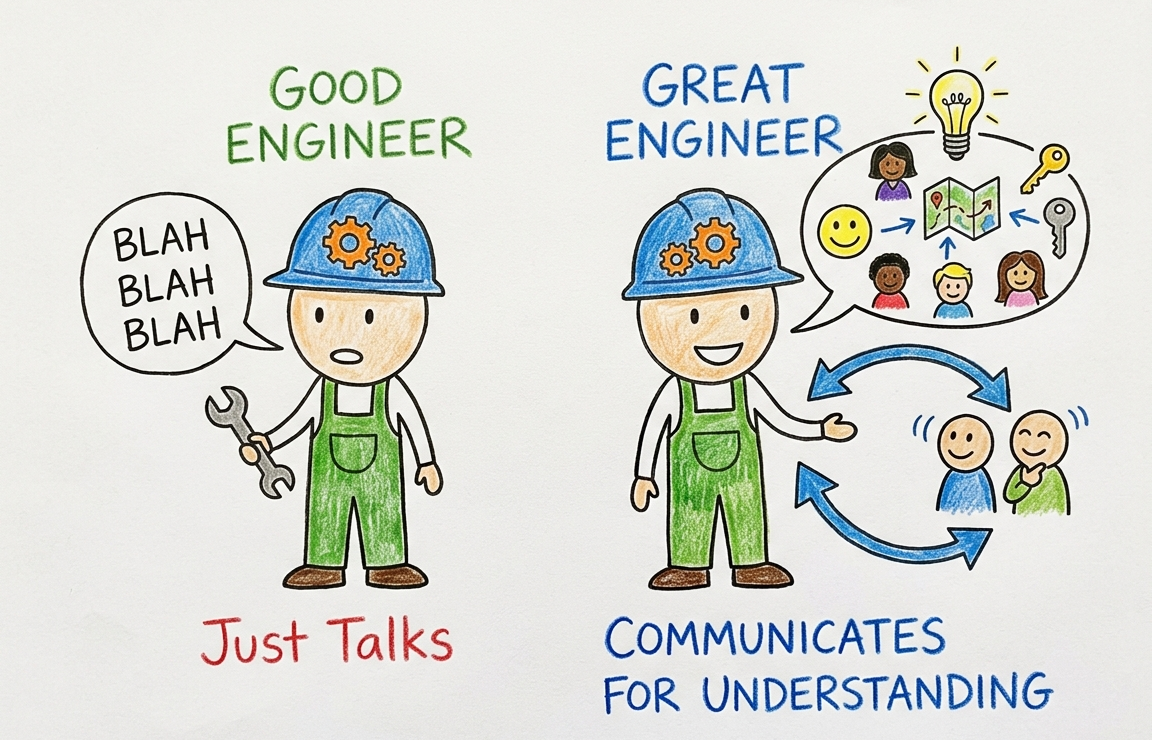
Communication skills aren’t something you simply have because you know words and can talk. Of course, for some people they are easier to master than for others, but honestly, the same is true for every other skill.
What is unfortunate is the opinion shared by many that:
- good communication is just the ability to talk
- this isn’t a skill that deserves much, if any, additional attention (after all, everyone knows how to talk)
I believe the reason behind such thinking is the fact that all of us communicate somehow - better or worse - and it is not always obvious what value this skill brings to your life and career. Since everyone communicates, we have a tendency to ignore the connection between communication skills and professional success.
Yet, if you are a CTO, architect, technical lead, or senior developer, there are more and more situations where strong communication skills become invaluable.
Personally, I recognize a couple of levels of communication. Depending on which one you use, your chances of being heard increase, and the message you want to share is far more likely to be understood the way you intended:
- You share the thoughts that appear in your head - you just talk.
- You intentionally build the message to make it clear - you improve the wording, think about vocabulary, and use examples.
- You intentionally shape the message, but you think not only about clarity, but also about the audience - how familiar they are with the topic, whether they will understand the vocabulary, and which aspects will require further explanation.
- You prepare the message in the same way as in the previous point, but you also ask questions and encourage others to rephrase what was said to confirm understanding.
And just to make it clear - even though the fourth level gives you the highest confidence that the audience understood the message correctly, not every conversation deserves that level of effort.
Before deciding how much time and energy to invest in preparation, ask yourself a couple of questions:
- what is at stake? Is it a casual conversation next to the coffee machine with a long-known colleague, or a meeting with stakeholders about the future of your project?
- how much time do you have? Is it five minutes or an hour?
- what is the goal? Is it pure entertainment, or are you trying to convince management to change a strategic decision?
It should not take long to answer these questions, but even a quick evaluation can completely change how you approach the conversation. Once you understand the importance of the discussion, you can consciously choose the communication strategy that fits best.
This is only the beginning of the topic, but if you haven’t paid much attention to communication skills so far, maybe now is a good moment to start. The more senior you become, the more important this skill gets.
Comments ()