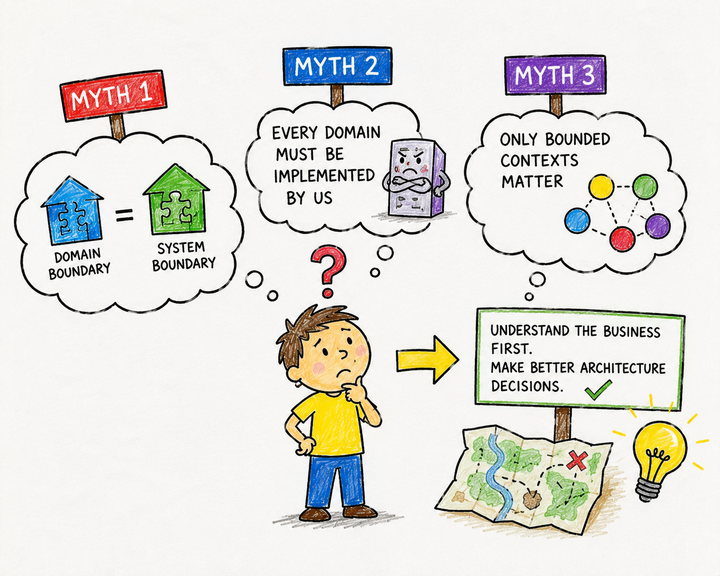
Domain Types: Three Myths About Domain Types Many teams treat domain types as implementation guidance. In reality, they are a tool for understanding the business first. Let's challenge three common myths that can shape your architecture decisions.

Domain Types: How much should you trust AI? Well-defined boundaries help AI understand your system. Domain Types answer a different question: how much should you trust AI? Learn where AI can safely accelerate development and where engineering judgment remains essential.
Link Dump #246 What to do when it's hot outside? Grab a book and enjoy the reading: 1. #BookOfTheMonth Just Listen 2. Software Architecture 1. Domain Events Are Not Integration Events #PickOfTheWeek Reflecting on distributed systems design, this article take breaks down the essential distinction between internal domain events and public
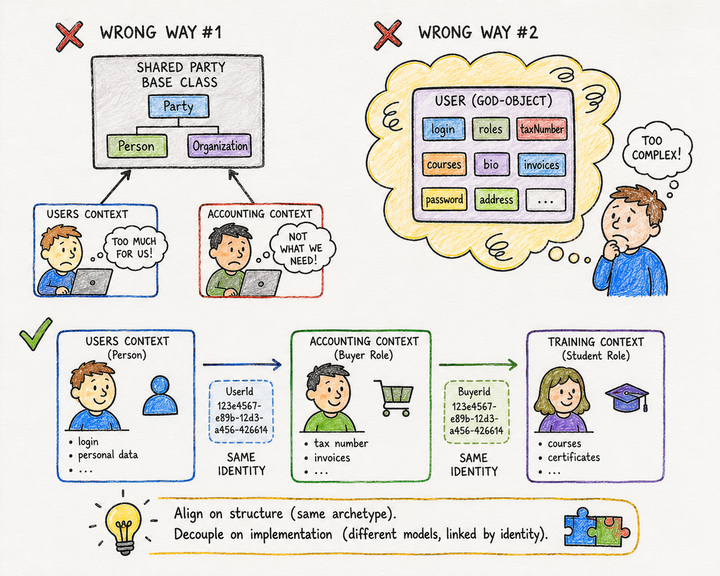
The Anatomy of the Party Archetype The Party archetype is the foundation for modeling business participants. Discover how separating identity, roles, and relationships creates a flexible domain model that grows with changing business needs.
Domain Types: Ownership is not random Domain types influence much more than architecture and sourcing decisions. They can also help you assign ownership more effectively, balance team growth, and reduce the risk of placing the wrong people in the most critical parts of your system.
Beyond DDD Building Blocks: Why You Need Archetypes Aggregates, Entities, and Value Objects help you implement business logic. Archetypes help you understand the business itself. Discover why DDD building blocks are only part of the modeling puzzle.
Domain Types: The architecture your subdomain deserves Applying the same architecture everywhere often leads to overengineering, underengineering, or both. Discover how domain types can help you choose the right level of architectural complexity.
The rewarded hero and the architect who never pays the price Why do so many systems become legacy despite being built by talented engineers and architects? The answer may have less to do with competence and more to do with feedback loops that are too long to teach the right lessons.
When trade-offs, debt and legacy collide Every architectural decision has a cost. Some costs are accepted, some are postponed, and some appear because evolution never happened. Understanding these differences can change how you assess and improve a system.